
Mold from Water Leaks & Slab Leaks in Lubbock
A leak under the sink, a failed water heater or a slab leak under the floor can feed mold long before you see it. We connect Lubbock-area homeowners with TDLR-licensed mold assessors and remediators for free, no-obligation quotes.
Get a Free Quote Call (727) 300-6656Plumbing leaks are a leading mold source in a dry climate
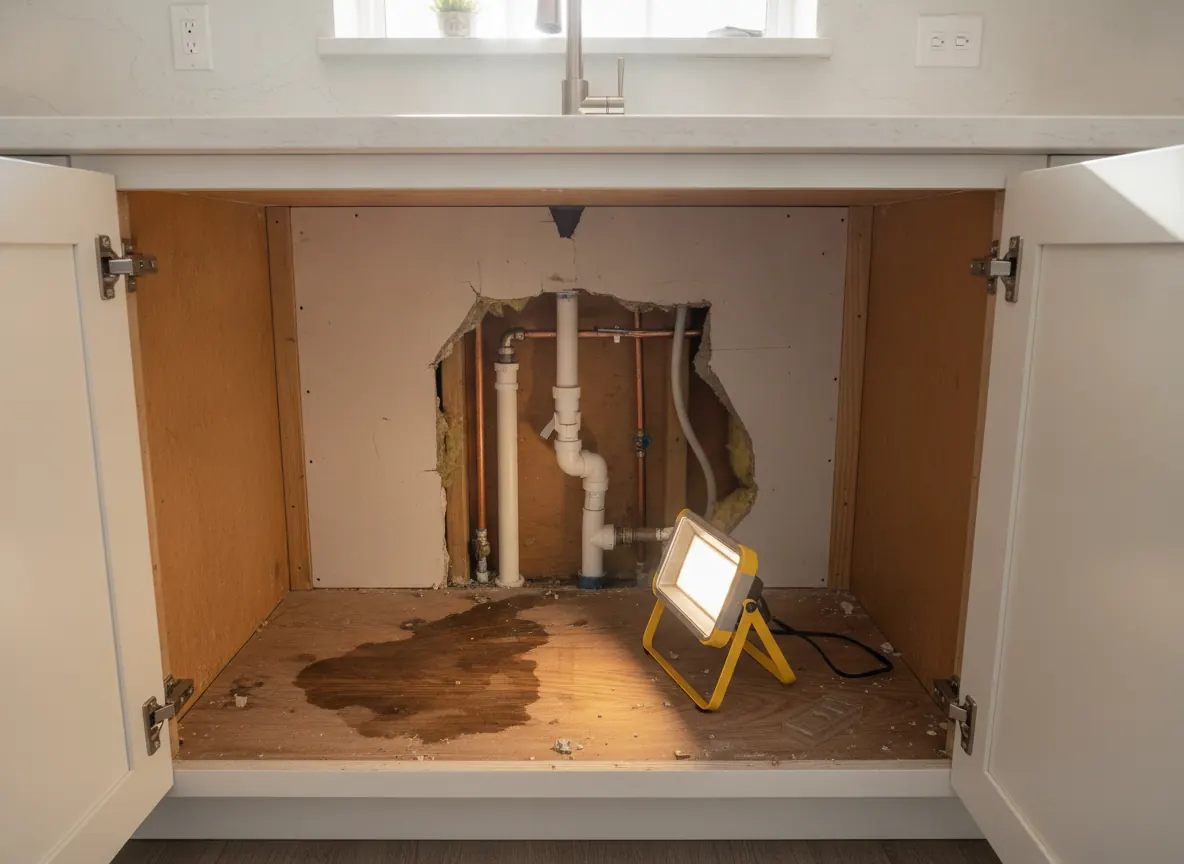
Lubbock’s outdoor air is dry for much of the year, so indoor mold here usually traces back to a specific water source rather than general humidity. TDLR’s consumer sheet lists pipe leaks among the common moisture problems behind indoor mold, alongside roof leaks, floodwaters, sewage back-ups and overflowing toilets, sinks and tubs. A slow drip inside a wall can keep drywall and framing damp for weeks without showing on the surface.
Common plumbing sources in Lubbock-area homes include:
- Supply or drain lines leaking inside walls, often behind kitchens, bathrooms and laundry rooms
- Water heaters that leak from the tank, valves or connections, soaking the closet floor and nearby walls
- Toilet seals, shower pans and tub surrounds that let water seep into the subfloor
- Slab leaks: water or drain lines leaking under or within a concrete slab foundation
- Pipes that split in a hard freeze. January lows in Lubbock average about 27°F under NOAA’s 1991–2020 normals
Can a slab leak cause mold?
It can. When a line under the slab leaks, water can wick up into the bottom of walls, baseboards, tack strip, carpet pad and wood flooring. Signs homeowners often notice include warm or damp spots on the floor, the sound of running water when fixtures are off, an unexplained jump in the water bill, cracked or lifting flooring, and a musty smell near the base of walls.
The order of operations matters. EPA’s mold guide says: “If you clean up the mold, but don’t fix the water problem, then, most likely, the mold problem will come back.” A leak-detection plumber locates and repairs the leak; the wet materials then need to dry, and any mold growth is assessed and removed. EPA also says water-damaged areas and items should be dried within 24–48 hours to prevent mold growth, so a fast repair helps limit what follows. Our post Can a slab leak cause mold? goes deeper on the warning signs.
Plumbing repair and mold work are separate jobs
Texas Occupations Code §1958.002(b) carves out the diagnosis, repair, cleaning or replacement of plumbing systems and appliances from mold licensing when the work is not conducted for the purpose of mold assessment or mold remediation. In plain terms, your plumber can find and fix the leak and replace the water heater without a mold license. The mold cleanup is a different matter: if a hired company removes mold affecting 25 contiguous square feet or more, it needs a TDLR mold remediation license under §1958.102(c).
So a typical leak-to-mold job in Lubbock involves several separate parties:
Plumber or leak-detection specialist
Finds and repairs the leak. Ask whether they can document where the water went.
Licensed mold assessor
Maps moisture and growth and, for larger areas, writes the remediation protocol.
Licensed mold remediator
Sets up containment, removes damaged material and cleans the area per the protocol. Under §1958.155, this must be a different company from the assessor.
Clearance and certificate
A licensed assessor confirms the work passed, and the owner receives a Certificate of Mold Damage Remediation (TDI form MDR-1) within 10 days.
Homeowners cleaning mold in their own home are exempt from licensing at any size under §1958.102(e) and 16 TAC §78.30(b). Ask any company for its TDLR license number and check it on TDLR’s license search.
Note: SB 1255 (2025) changed parts of Texas’s mold law, and TDLR is updating its rules. This is general information, not legal advice.
Crawl spaces in older homes
Not every house sits on a slab. Many older homes have a pier-and-beam foundation with a crawl space under the floor. A leaking drain or supply line in a crawl space can drip onto soil and wood for a long time before anyone looks, and the first sign is often a musty smell in the rooms above or a soft spot in the floor.
Crawl space moisture problems usually come from plumbing leaks, poor drainage around the foundation or water that pooled after a heavy rain. A licensed assessor will typically look at the joists, subfloor and any insulation, check moisture levels and recommend how the area should be dried and cleaned. Any plumbing fix should come first, so the cleanup is not wasted.
What to do right after you find a leak
- Shut off water to the fixture, or at the main if you can’t isolate it.
- Call a plumber to locate and repair the leak.
- Move belongings out of the wet area and start drying, aiming for EPA’s 24–48 hour window.
- Photograph the damage for your records and any insurance claim.
- If you see or smell mold, or water sat inside a wall or under flooring, get quotes from a licensed assessor before tearing out materials.
Typical national ranges from cost guides, 2024–2026 (not quotes): wall mold remediation runs about $1,000–$12,000 and per square foot of affected area about $10–$30. The real price comes from licensed pros after an on-site assessment. See the cost guide, or learn about mold removal and mold inspection and testing.
Frequently asked questions
Can a slab leak cause mold?
Yes. Water leaking under or within a slab can wick into the bottom of walls, baseboards, carpet pad and wood flooring, where mold can grow out of sight. Signs include damp or warm floor spots, a rising water bill and a musty smell near walls. Fix the leak first, dry the area quickly, then have a licensed assessor check for growth.
Can mold grow after a leak is fixed?
It can, if materials stayed wet. EPA’s mold guide says water-damaged areas and items should be dried within 24–48 hours to prevent mold growth. Fixing the leak stops new water, but drywall, insulation or flooring that stayed damp may already have growth. If you notice a musty smell or staining after the repair, a licensed assessor can check the area.
Does my plumber need a mold license?
Not for the plumbing. Texas Occupations Code §1958.002(b) excludes the diagnosis, repair or replacement of plumbing systems and appliances from mold licensing when it is not done for the purpose of mold assessment or remediation. Removing mold is different: a hired company needs a TDLR remediation license once the mold reaches 25 contiguous square feet. This is general information, not legal advice.
Can a water heater leak cause mold?
Yes. A leaking tank, valve or connection can soak the closet floor, baseboards and the lower part of nearby walls. Because water heaters often sit in closets or garages people rarely check, growth can go unnoticed. Have a plumber repair or replace the unit, dry the area, and get quotes from a licensed assessor if materials stayed wet or smell musty.
What about mold in a crawl space?
Many older homes have a crawl space under a pier-and-beam floor, where leaking pipes or poor drainage can keep wood damp. Signs include a musty smell indoors or soft flooring. A licensed assessor will typically check joists, subfloor and insulation and recommend drying and cleanup. Fix the water source first so the cleanup lasts. Tell us what you’re seeing for free quotes.
Found mold or a hidden leak? Get a clear plan.
Free, no-pressure quotes from licensed pros across Lubbock, Wolfforth, Shallowater, Slaton and the South Plains.