
Does Texas have mold laws? Yes, and they are more specific than many homeowners expect. Texas is one of the few states that licenses the people who assess and remediate mold. If you have found mold in a Lubbock, Wolfforth or Levelland home, the first practical question is usually this one: is the job small enough to handle yourself, or does the law expect a licensed professional? The answer turns on who is doing the work and on one number, 25 contiguous square feet.
This is general information, not legal advice. Texas mold rules are set by statute and TDLR rule, and SB 1255 (2025) changed parts of the law while TDLR updates its rules. For a question about your own situation, check with TDLR or a Texas attorney.
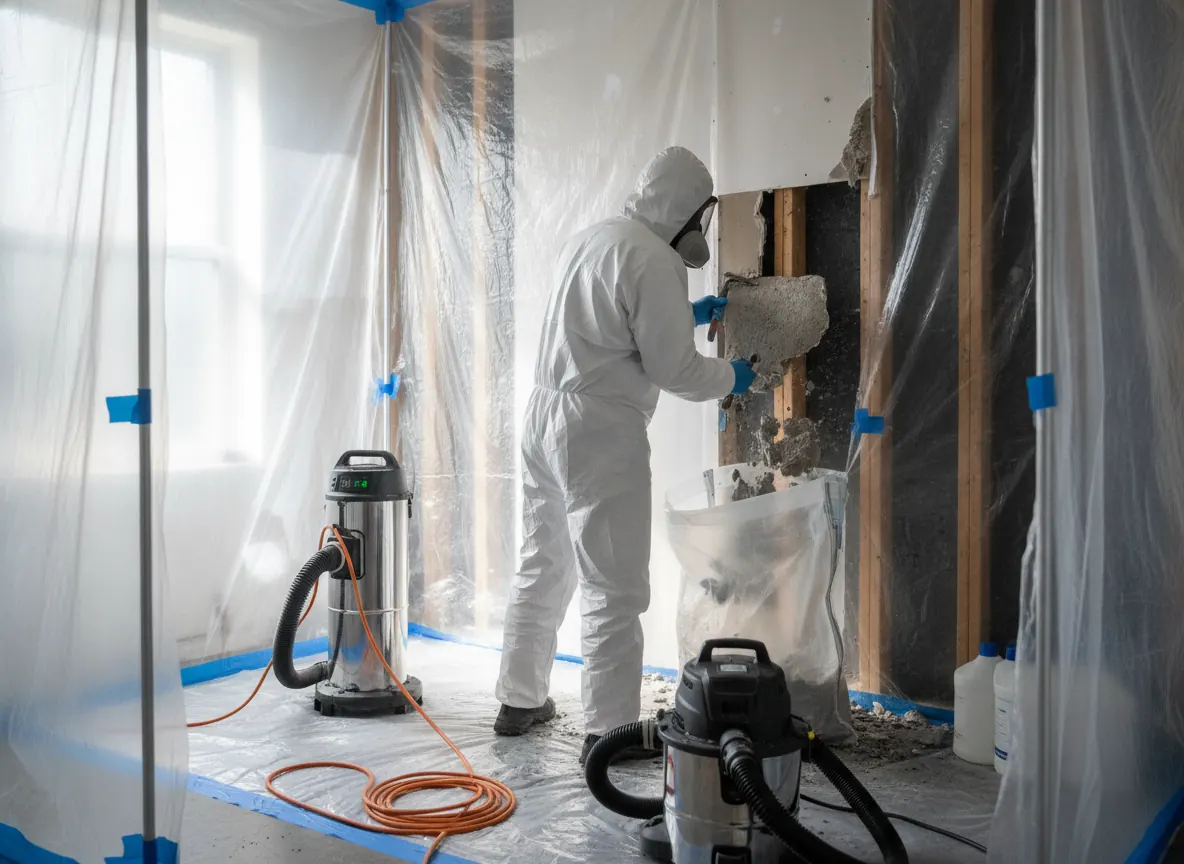
Is mold regulated in Texas?
It is. The rules live in two places. The statute is Texas Occupations Code chapter 1958, "Mold Assessors and Remediators." The detailed rules are in 16 Texas Administrative Code chapter 78. The Texas Department of Licensing and Regulation (TDLR) runs the program. TDLR's FAQ notes that the program moved over from the Department of State Health Services on November 1, 2017, which is why older documents may cite the former DSHS rules.
The core requirement is in Texas Occupations Code §1958.101(a): "A person may not engage in: (1) mold assessment unless the person holds a mold assessment license; or (2) mold remediation unless the person holds a mold remediation license." TDLR's rule, 16 TAC §78.20(a), says the same thing and adds that the requirement applies "unless specifically exempted under the Act or §78.30."
The 25 contiguous square foot rule
Texas Occupations Code §1958.102(c) sets the size threshold: "A person is not required to be licensed under this chapter to perform mold remediation in an area in which the mold contamination affects a total surface area for the project of less than 25 contiguous square feet."
Three details matter here:
- It covers remediation only. The research behind this post found no matching small-area exemption for mold assessment in that subsection.
- It is about contiguous area. The statute measures the affected surface for the project as a connected area. If you are unsure how a patch would be measured, that is a question for a licensed assessor.
- It can be lost mid-job. Under 16 TAC §78.30(d), an exempt person who discovers the mold reaches "25 contiguous square feet or more" must "immediately cease all remediation work" and tell the customer that any additional remediation and post-remediation assessment "must be performed by a person licensed or registered under this chapter."
Homeowners working on their own home
Here is where many articles get it wrong. The 25 square foot limit is not the limit for a homeowner doing their own work.
Texas Occupations Code §1958.102(e) says: "An owner, or a managing agent or employee of an owner, is not required to be licensed under this chapter to perform mold assessment or mold remediation on a residential property owned by that person with fewer than 10 dwelling units." TDLR's rule, 16 TAC §78.30(b), says this exemption applies "regardless of the total surface area within the subject property that is affected by mold growth." TDLR's January 2025 consumer sheet agrees.
In plain terms, according to those sources, a Lubbock homeowner may clean up mold in their own single-family home at any size without a license. The exemption does not apply to someone who "engages in the business of performing mold assessment or mold remediation for the public."
EPA's 10 square feet is advice, not a Texas threshold
EPA's mold guide says: "If the moldy area is less than about 10 square feet (less than roughly a 3 ft. by 3 ft. patch), in most cases, you can handle the job yourself." That is DIY advice, not a licensing rule.
Keep the two numbers apart:
| Number | Source | What it means |
|---|---|---|
| About 10 sq ft | EPA mold guide | Federal DIY advice: a small patch is usually manageable yourself |
| 25 contiguous sq ft | Tex. Occ. Code §1958.102(c) | Texas licensing threshold for hired remediation |
EPA also says, "If you clean up the mold, but don't fix the water problem, then, most likely, the mold problem will come back." Whatever the size, the leak, the cooler pan or the roof comes first.
When you hire someone
Once you pay a company, the picture changes. A hired company needs a license once the job reaches 25 contiguous square feet. And according to TDLR's FAQ, licensed firms do not get a small-job pass: "A licensed MRC performing a small mold remediation project (less than 25 contiguous square feet) is not exempt from the law and rules... The MRC does not, however, have to submit a notification for the project."
For larger jobs, 16 TAC §78.110 requires the licensed remediator to notify TDLR "no less than five calendar days before the anticipated start date" when mold "affects a total surface area of 25 contiguous square feet or more." In an emergency, Texas Occupations Code §1958.153(b) requires notice "not later than the next business day."
A licensed job of that size follows a set sequence, explained in more detail in our post on why the assessor and remediator must be separate:
Assessment and protocol
A licensed mold assessment consultant inspects and writes the remediation protocol.
Remediation
A separate licensed remediator does the work under that protocol.
Clearance
A licensed assessor performs the post-remediation assessment.
Certificate
The owner receives a Certificate of Mold Damage Remediation (TDI form MDR-1) within 10 days.
That two-firm structure also affects budgets. See the mold remediation cost guide for typical national ranges.
Work that is not "mold remediation" under the statute
Texas Occupations Code §1958.002(b) lists activities that are outside the definitions when "not conducted for the purpose of mold assessment or mold remediation," including "routine cleaning," "the diagnosis, repair, cleaning, or replacement of plumbing, heating, ventilation, air conditioning, electrical, or air duct systems or appliances," and "commercial or residential real estate inspections."
When is mold remediation required in Texas?
This search usually means one of two things. If it means "when must a licensed company do the work," the answer above applies: hired remediation of 25 contiguous square feet or more. If it means "does the law make someone clean up mold," TDLR's consumer sheet is direct: "Current Texas law does not require landlords or property owners to inspect for or clean mold," and TDLR "cannot require a landlord or someone else to clean or remove mold." Renters with a leak-related problem may want to read Texas Property Code §92.052 or get legal advice.
A note on 2025 changes
SB 1255, effective September 1, 2025, amended chapter 1958. TDLR says it removed mycotoxins from the definition of "mold," excluded demolition after a fire or other disaster from the chapter's scope, and repealed one employee exemption. TDLR also says "All current administrative rules remain in effect until new administrative rules, procedures and definitions have been formally adopted."
What to do next
If the area looks small and it is your own home, EPA's guide is a reasonable starting point. If the mold is spreading, hidden, or tied to a leak you cannot see, a licensed assessor can measure it and write a plan. Before you hire anyone, look up their TDLR license. Ask any company for its TDLR license number and check it on TDLR's license search.
We connect Lubbock-area homeowners with TDLR-licensed mold assessors and remediators for free, no-obligation quotes. Tell us what you're seeing on our free quote form and we'll help you get quotes from licensed local pros. You can also read how mold inspection and testing and mold removal work in Texas. Call (727) 300-6656
Frequently asked questions
Does Texas have mold laws?
Yes. Texas Occupations Code chapter 1958 and 16 TAC chapter 78 require people who engage in mold assessment or mold remediation to hold a license from TDLR, unless an exemption applies. The main exemptions cover owners working on their own property and hired remediation under 25 contiguous square feet. This is general information, not legal advice.
Can I remove mold myself in Texas?
Generally, yes, on your own home. Texas Occupations Code §1958.102(e) exempts owners of residential property with fewer than 10 dwelling units, and 16 TAC §78.30(b) says this applies regardless of the affected area. EPA's guide separately suggests most patches under about 10 square feet are DIY jobs. This is general information, not legal advice.
What happens if a small job turns out bigger than 25 square feet?
Under 16 TAC §78.30(d), an exempt person who finds mold covering 25 contiguous square feet or more must immediately stop remediation and tell the customer that further remediation and the post-remediation assessment must be done by someone licensed or registered under the chapter. This is general information, not legal advice.