
Before anyone opens a wall in your Lubbock home to look for mold, it is worth five minutes to confirm they hold the right Texas license. TDLR's consumer guidance puts it simply: "Be sure to confirm that the professionals you're hiring are licensed by TDLR to perform this service." This guide walks through the TDLR mold license search step by step, explains what each license type means, and lists the other places a license number should show up on a real job.
This is general information, not legal advice. Texas mold rules are set by statute and TDLR rule, and SB 1255 (2025) changed parts of the law while TDLR updates its rules. For a question about your own situation, check with TDLR or a Texas attorney.
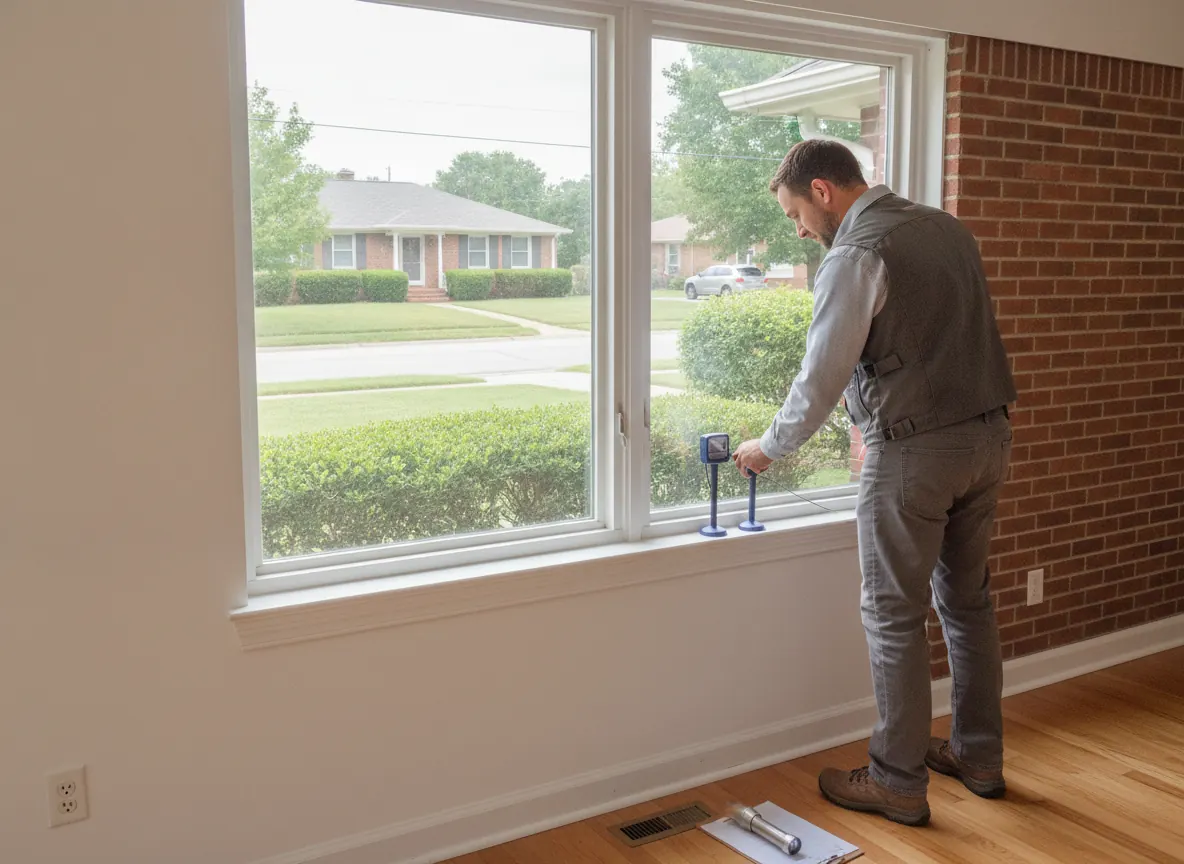
Do mold inspectors have to be licensed in Texas?
Generally, yes, when they are hired to do it. Texas Occupations Code §1958.101(a) says a person may not engage in "mold assessment unless the person holds a mold assessment license" or in "mold remediation unless the person holds a mold remediation license." The 25 contiguous square foot exemption in §1958.102(c) applies to remediation, not assessment, so a company you pay to inspect and evaluate mold is expected to hold an assessment license.
There are exceptions. Owners working on their own residential property with fewer than 10 dwelling units are exempt under §1958.102(e). And §1958.002(b) says "commercial or residential real estate inspections" are outside the definitions when "not conducted for the purpose of mold assessment." A home inspector who notes a stain during a sale inspection is in a different position from a company you hire to investigate mold. Our guide to the 25 square foot rule covers the exemptions in more detail.
Step-by-step: the TDLR mold license search
TDLR runs a free public lookup called the Active License Search, at tdlr.texas.gov/LicenseSearch/. Here is how to use it for a mold company.
Get the name and license number
Ask the company for its legal business name, the name of the person who will do the work, and each TDLR license number. A licensed firm should have no trouble giving you these. Write them down exactly.
Open the Active License Search
Go to TDLR's website and open the license search page. TDLR's 2025 consumer sheet links to it directly. Use TDLR itself as the authority; some third-party directories republish state data, but they can lag behind.
Pick the license type
The license-type dropdown lists each mold credential separately (see the table below). Choose the one that matches the role you are hiring for: an assessment license for the inspection and protocol, a remediation license for the cleanup.
Search by name, number, city or county
You can search by name or license number. You can also search by city or county, for example Lubbock, to see who holds that license type locally. A number search is the most precise check.
Read the result carefully
Confirm that the name matches the company or person in front of you, that the license type matches the job, and that the license is active. Texas Occupations Code §1958.1011 sets mold licenses at two years, so an old card or certificate may have lapsed.
Check for discipline
TDLR's FAQ says: "If a complaint results in disciplinary action taken by TDLR, it will be posted in our Administrative Orders Search for three years following the signed order." The Administrative Orders Search is also on TDLR's site.
TDLR mold license types explained
The dropdown in TDLR's search lists eight mold credentials. The names tell you which side of a project each one belongs to.
| License type | Side of the job | What to check |
|---|---|---|
| Mold Assessment Consultant | Assessment | Under 16 TAC §78.140, a licensed mold assessment consultant performs the post-remediation clearance assessment. Look for this license on whoever writes your protocol and signs off at the end. |
| Mold Assessment Technician | Assessment | A separate assessment credential. Ask what role the technician will play and who the licensed consultant on the project is. |
| Mold Assessment Company | Assessment | The firm-level license on the assessment side. |
| Mold Remediation Contractor | Remediation | TDLR's FAQ refers to remediation projects performed by a licensed MRC. Look for this on whoever runs the cleanup. |
| Mold Remediation Company | Remediation | The firm-level license on the remediation side. |
| Mold Remediation Worker | Remediation | A credential for workers on the remediation crew. |
| Mold Analysis Laboratory | Lab | Labs that analyze samples, if sampling is part of the job. |
| Mold Training Provider | Training | Organizations that provide mold training courses; not a firm you would hire for your home. |
One more point to keep in mind while you search: Texas Occupations Code §1958.155(a) says "A license holder may not perform both mold assessment and mold remediation on the same project." A firm can hold both licenses, according to TDLR's FAQ, but not use both on your job. So on a licensed project you should expect two different names in your search: one assessment license and one remediation license. Our post on the assessor and remediator rule explains why.
Where the license number should show up on the job
The license search is not the only check. TDLR's rules require license details on paperwork and at the worksite:
- At the worksite: 16 TAC §78.70(b) requires licensees to carry an ID card or credential while working.
- On reports and protocols: under 16 TAC §78.52, a consultant includes the "license number and expiration date on each report and each plan."
- On the work plan: 16 TAC §78.58 requires the remediator's work plan to include "the license number and license expiration date on the cover page."
- The consumer sheet: under 16 TAC §78.70(c), licensees must provide TDLR's Consumer Mold Information Sheet at first contact with the client, or at least one calendar day before any mold-related activity starts.
- Complaint contact: under 16 TAC §78.70(g), licensees display TDLR's name, web address, mailing address and phone number for complaints on bids, estimates, contracts, bills and information brochures.
If a bid arrives with none of this, ask about it before you sign.
Questions to ask along with the lookup
- Which TDLR license type and number covers the person and the company doing my job?
- Are you the assessor or the remediator on this project? Who holds the other role?
- Will the job reach 25 contiguous square feet, and will you notify TDLR five days before starting, as 16 TAC §78.110 requires for those jobs?
- Who will perform clearance, and when will I get the Certificate of Mold Damage Remediation (TDI form MDR-1)? Under §1958.154, it is due within 10 days after remediation is completed.
A note on 2025 law changes
SB 1255 (2025) amended chapter 1958, and TDLR says it is updating its rules. TDLR states that "All current administrative rules remain in effect until new administrative rules, procedures and definitions have been formally adopted." License types or details may change, so treat TDLR's live search as the final word.
Get quotes, then verify
We connect Lubbock-area homeowners with TDLR-licensed mold assessors and remediators for free, no-obligation quotes. Whoever you end up talking to, through us or on your own, ask any company for its TDLR license number and check it on TDLR's license search. To get started, request a free quote, or read how mold inspection and testing and the overall mold remediation process work. Call (727) 300-6656
Frequently asked questions
How do I look up a mold license in Texas?
Use TDLR's Active License Search on tdlr.texas.gov. Choose the mold license type from the dropdown, such as Mold Assessment Consultant or Mold Remediation Contractor, then search by name, license number, city or county. Confirm the name, the license type and that the license is active. Check TDLR's Administrative Orders Search for discipline.
How long is a Texas mold license good for?
Texas Occupations Code §1958.1011 sets mold licenses at two years. That is why it is worth checking the live TDLR search rather than relying on a printed card or an old certificate. If the license has expired, ask the company about it before any work starts. This is general information, not legal advice.
Can one company hold both a mold assessment and remediation license?
According to TDLR's FAQ, a firm can hold both licenses. However, Texas Occupations Code §1958.155(a) says a license holder may not perform both mold assessment and mold remediation on the same project, with a narrow exception for school district employees. Expect two separate firms on your job. This is general information, not legal advice.